

When researching contemporary hair loss solutions, Direct Hair Implantation, widely referred to as DHI, typically presents itself as a highly attractive pathway. Even though this specialized technique promises outstanding aesthetic benefits, it remains crucial to remember that it is a invasive treatment. Consequently, knowing the associated downsides and adverse outcomes is paramount for prospective person. Going into surgery with realistic perspectives guarantees a better-managed journey and minimizes shocking setbacks during recovery.
During the phase after a DHI surgery, patients regularly face a variety of common physiological responses. Heading the list of these is temporary puffiness, an issue that typically shows up across the brow area. This is perfectly typical and usually fades away within a few days. In tandem with this, mild to moderate erythema and sensitivity can be expected to occur in both the back of the head and implanted regions. Such manifestations merely signal the body's natural healing response to the micro-trauma caused by the specialized implanter pen.
An additional frequent occurrence that patients observe is the appearance of microscopic crusts at the site of each transplanted graft. Though these structures might appear worrying to the untrained eye, they serve an important purpose in shielding the delicate grafts. It remains essential never to disturb these scabs, as premature removal could destroy the fragile grafts and lead to significant scarring. Usually, these scabs spontaneously fall away within a fortnight as part of the prescribed shampooing process.
Beyond these short-term issues, there are potentially notable challenges that, even though rare, may arise. Bacterial infection represents one of the most critical hazards in any hair transplant procedure. Given that DHI involves Making hundreds of tiny penetrations in the scalp, the risk of pathogens penetrating the tissue is always present. So as to mitigate this possibility, top-tier surgeons Maintain strict sanitation protocols and frequently prescribe preventative medications. Individuals who ignore the explicit aftercare guidelines significantly heighten their chances to bacterial complications.
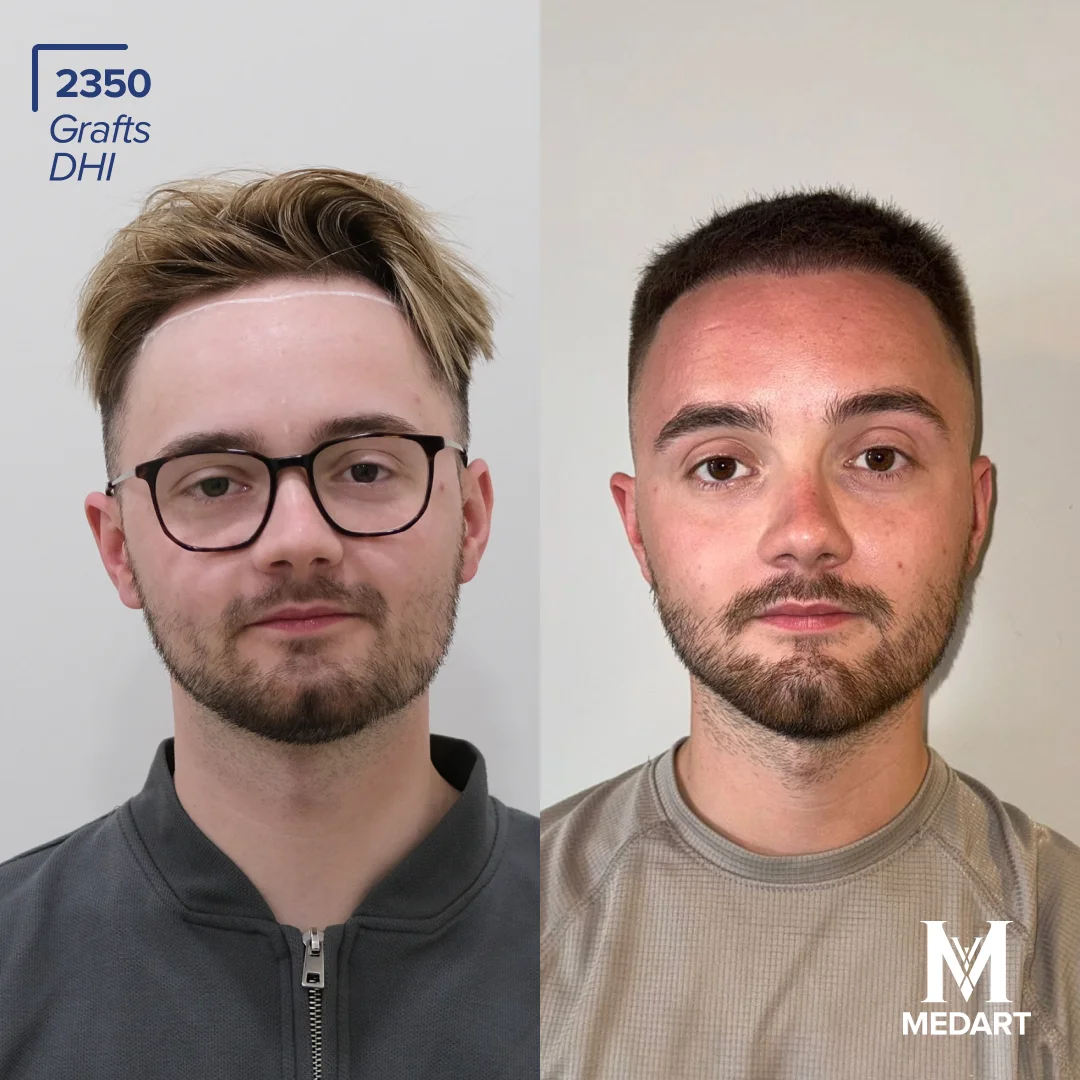
Bleeding is another potential complication which warrants mindful monitoring. Although a tiny amount of bleeding is perfectly standard during and immediately after the harvesting phase, uncontrolled oozing might be a sign of anomalous problems. This is commonly triggered by the ingestion of certain substances, including ibuprofen, or consuming alcohol prior to the surgery. It is vital for patients to disclose their entire health background to the surgical team well in advance.
Furthermore, one cannot overlook the possibility of developing transient loss of sensation or strange feeling in the operated zones. This develops because the extraction tools may bruise or slightly damage the superficial nerves running through the scalp. For most cases, this numbness is fully temporary and steadily fades over a few months as the microscopic nerves recover. Nevertheless, in highly exceptional instances, partial numbness may endure long-term.
A notable and frequently worrying phenomenon associated with DHI is called "shock shedding." This condition involves the unexpected shedding of existing or freshly grafted follicles within a few weeks after the operation. Noticing hair transplant faq shedding after undergoing time and money often proves to be disheartening for patients. Fortunately, it is imperative to understand that shock loss is normally a transient phase to the physical stress of the scalp intervention. The roots are fundamentally intact beneath the skin, and robust regrowth typically resumes within a few months' time, ultimately producing the intended fullness.
When analyzing aesthetic risks, the skill of the technician is the most critical variable. Inadequate graft insertion may cause an artificial hairline, in which the orientation and depth of the transplanted grafts do not mimic the natural growth. Because DHI relies on a implanter pen to place the graft simultaneously without pre-made slits, the operator must possess immense artistic skill. A low-cost clinic might leave a "doll-like" result which proves very costly to fix in future corrective surgeries.
Equally important, excessive extraction of the donor area is a lasting risk which is often ignored. If the clinic takes an excessive number of follicles from the donor region of the scalp, it can render that zone permanently depleted. Such an outcome not only appears damaged, but it also exhausts the patient's limited reserve of grafts, leaving them unable to undergo any future hair transplant treatments if natural baldness progresses over time.
In order to insure yourself against the likelihood of these various adverse outcomes, meticulous preparation and selecting a certified medical professional are the absolute best defenses. Steer clear of unregulated centers that focus on volume over artistic precision. Throughout the consultation, feel free to interrogate the team about the surgeon's credentials, the sterilization standards in place, and the clinic's verifiable success rates. A reputable doctor will honestly lay out both the advantages and the potential hazards specific to your individual medical condition.
In conclusion, even if Direct Hair Implantation remains an uniquely capable tool in the crusade to reverse hair loss, it is never entirely without consequences. Through arming yourself with facts on the potential adverse reactions, adhering meticulously to pre-and post-operative protocols, and investing in a highly qualified surgeon, you can significantly maximize your likelihood of achieving a beautiful, permanent transformation. Caution and patience will always be the cornerstone components to an successful hair restoration outcome.